Student Name
Ria Ranjit
Studio
Creative Transitions
Faculty
Prachi Mehrotra
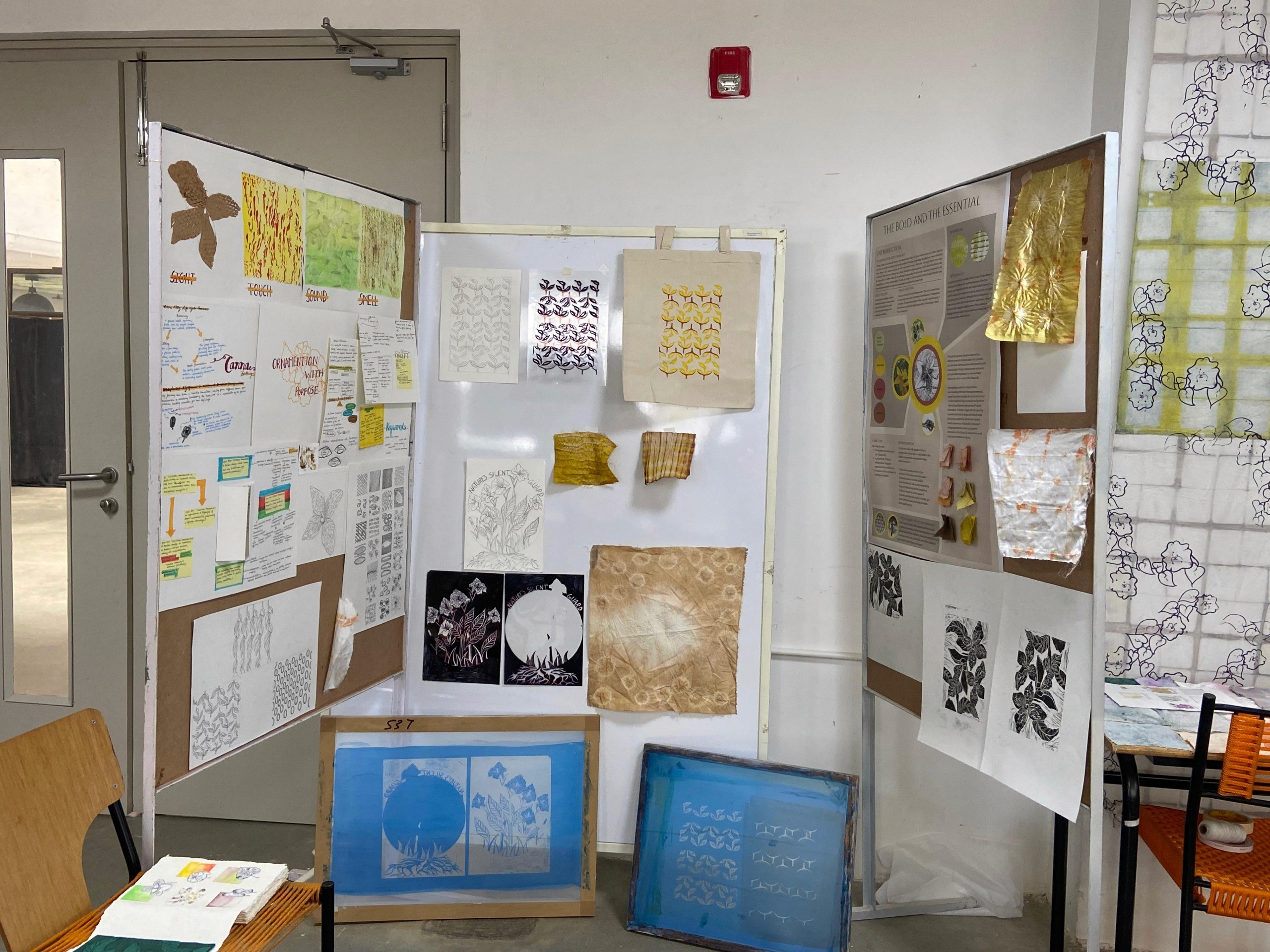
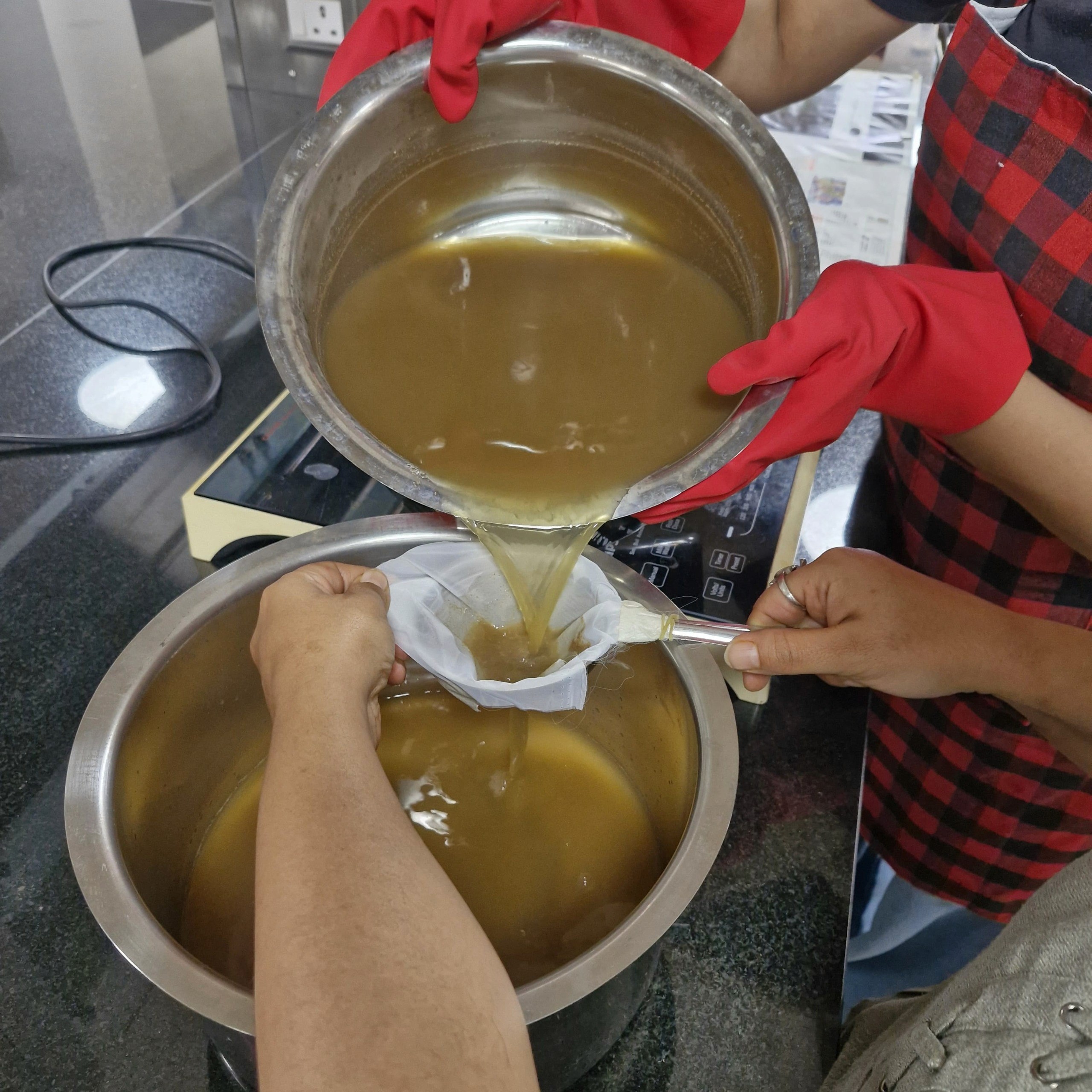
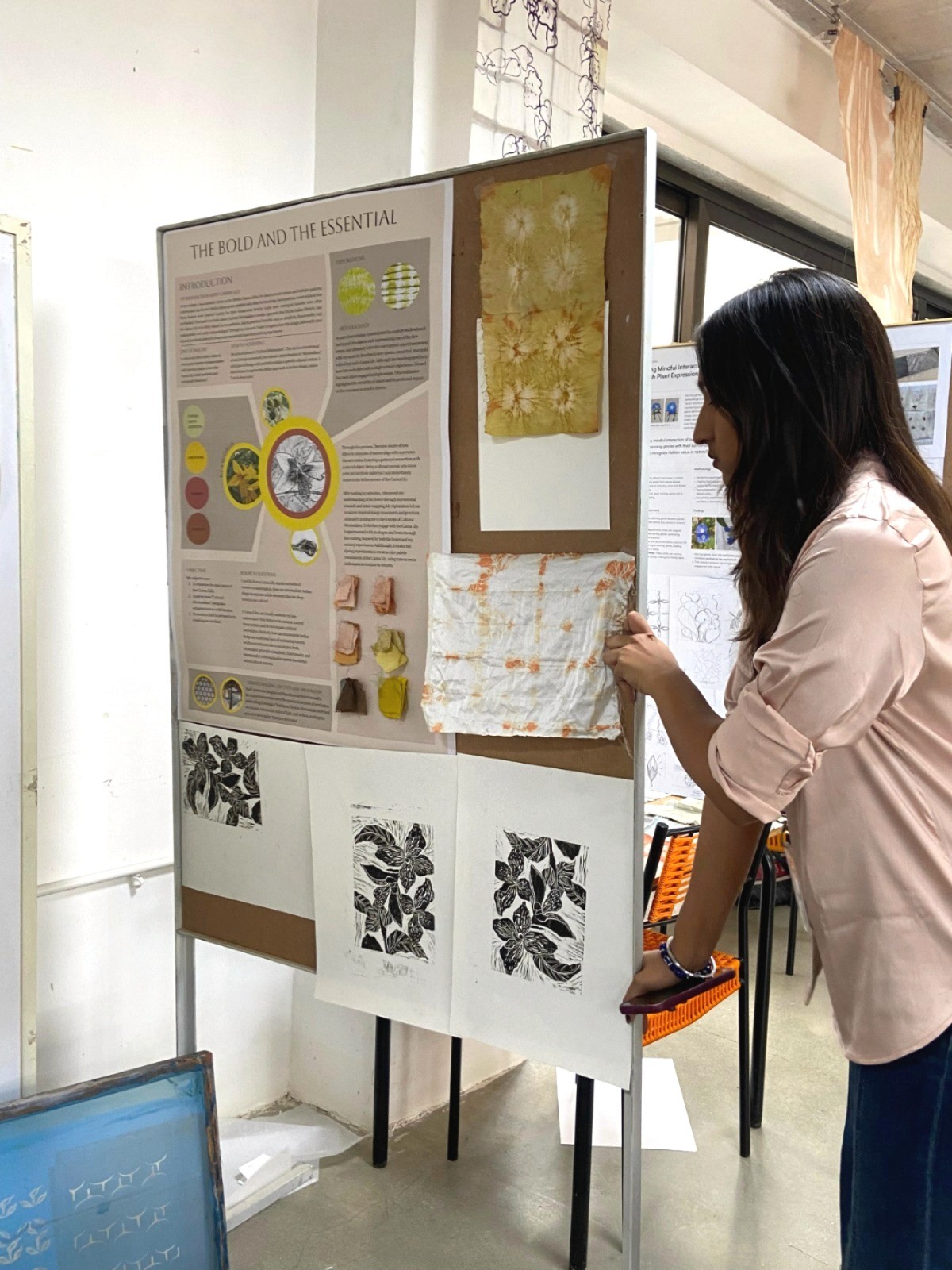
This seminar was a journey of unlearning, observation, and material storytelling. What began as discomfort slowly became discovery—as I gravitated toward the overlooked Canna Lily, I learned to embrace anomaly as a catalyst for insight. Through experiments with natural dyeing and surface techniques, I explored the contrast between spontaneity and control. Working with fabric taught me that design isn’t just visual—it’s responsive, shaped by material behavior and environmental context. As I developed a personal language of edges, contrasts, and flows, I began to see textiles as living systems that hold cultural and ecological significance. Grounded in the philosophy of cultural minimalism, my process moved from instinct to intention—strategizing outcomes without losing the essence of exploration. This seminar helped me reframe textiles not as static artefacts but as evolving carriers of stories, systems, and sustainability.